You’ve probably heard the phrase, “There’s no such thing as bad PR.” For decades, it has resonated across various fields, from classrooms to media circles to corporate boardrooms, implying that any attention, whether negative or positive, is ultimately beneficial. But is it really true? Can bad PR work in your favor, or is this just an outdated cliché?
The Origins of “Bad PR is Good PR” 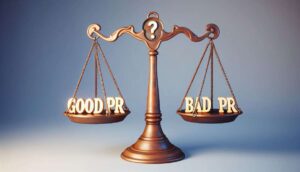
The roots of the “bad PR is good PR” mentality are linked to the belief that all publicity keeps your brand in the public conversation. As the saying goes, “Any press is good press.” Historically, public figures like P.T. Barnum, the 19th-century showman, were known to embrace this ideology. More recently, figures such as Donald Trump, Kim Kardashian, and Elon Musk have used this strategy to be top-of-mind.
Donald Trump is a prime example of someone who has leveraged controversy to stay in the spotlight. Trump has made headlines for numerous controversial statements and actions throughout his career. While much of the press was negative, it consistently kept him in the public eye and maintained his relevance in American politics and media.
Kim Kardashian has often been at the center of media storms, whether due to her personal life, business ventures, or social media posts. Controversies, such as those surrounding her family’s reality show or her business decisions, often drive public and media interest, helping her maintain a high profile in the entertainment industry.
Elon Musk frequently makes headlines for his unconventional statements and actions. Musk’s willingness to engage in controversy and his unique approach to communication keep him highly visible and relevant in the tech and business worlds.
These individuals and brands have effectively used controversy and negative press to their advantage, demonstrating that, in some cases, bad press can be a powerful tool for maintaining public attention and relevance.
When Bad PR Can Be Good PR
In some rare cases, negative publicity has worked to a company’s advantage. Think of brands that thrive on controversy, like tabloids or social media influencers who deliberately stir up drama to keep followers engaged. Shock value, scandal, or even outrageous comments can sometimes fuel viral marketing, leading to a surge in attention.
For instance, fashion brands like Abercrombie & Fitch have, in the past, received backlash for controversial statements or marketing strategies. Yet, the outrage didn’t always result in a loss of customers. Rather, the brand gained widespread media coverage and conversation.
In the digital age, viral moments can amplify attention quickly, and some brands manage to convert that temporary outrage into a longer-term win by strategically navigating the fallout.
The Risks of Bad PR
While there are a few exceptions, most brands don’t recover unscathed from negative publicity. Bad PR can severely damage a brand’s reputation if handled poorly, resulting in customer boycotts, stock price drops, or long-term distrust.
Take, for example, United Airlines, which faced immense backlash in 2017 after forcibly removing a passenger from a flight. The video of the incident went viral, and while it certainly put the airline in the headlines, the damage to its image was undeniable. In the weeks following, the airline suffered from a significant dip in public opinion and had to work hard to rebuild trust.
Social Media: A Double-Edged Sword
With the rise of social media, bad PR can escalate quickly. A single tweet or viral post can transform an isolated incident into a full-blown crisis. Negative reviews, customer complaints, or social media mishaps can damage a brand’s image in real time, and there’s no escaping the digital footprint these incidents leave behind.
On the flip side, brands that deal with a crisis with transparency and humility often emerge stronger. Think of how Starbucks handled a racial bias incident in 2018. By closing over 8,000 stores for a day of employee training and openly acknowledging their mistake, they demonstrated a commitment to doing better, which helped mitigate long-term damage.
When Bad PR Backfires
Some companies have tried to ride the wave of negative press by intentionally pushing boundaries, only to have it backfire spectacularly. For instance, Pepsi’s 2017 ad featuring Kendall Jenner, which trivialized social justice movements, received an overwhelmingly negative response. The brand quickly pulled the ad, but the damage was already done. In this case, the bad PR was not something Pepsi could spin into a win, it tarnished their image and created a disconnect with their audience.
The Verdict: Does Bad PR Help?
Ultimately, whether bad PR is genuinely “good” depends on the nature of the situation and how it’s handled. For brands that are equipped to turn a crisis into a strategic opportunity, bad PR can sometimes lead to positive outcomes. However, more often than not, negative publicity leads to long-term damage that requires significant time, money, and effort to repair.
While “bad PR is good PR” may still resonate in certain industries or niche circumstances, the goal for most brands should be to avoid bad publicity altogether. In today’s highly connected world, reputation is everything, and the consequences of negative PR can linger far longer than any short-term gains.