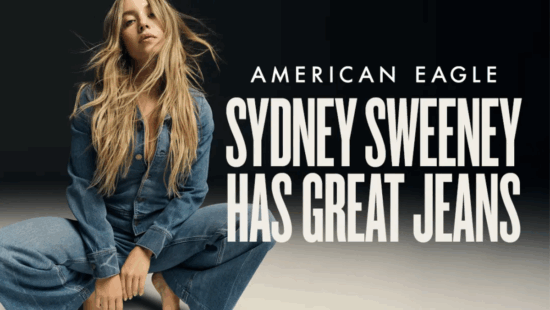
American Eagle’s recent campaign with Sydney Sweeney set out to be lighthearted and clever, a playful pun on “great jeans” that aimed to connect with a young audience. But instead of sparking buzz in the way the brand had hoped, the ad quickly stirred up controversy and conversation about representation, messaging, and the responsibilities brands carry in today’s cultural climate. Leaving many questioning how it got approved in the first place.
The pairing of Sydney Sweeney, an in-demand actress, with the tagline “Sydney Sweeney Has Great Jeans” sparked concerns about the message being conveyed, both explicitly and implicitly. While the brand may have intended something lighthearted or clever, the cultural context made the campaign feel outdated and exclusionary to many, particularly Gen Z. The ad’s tone also leaned heavily into the sexualization of Sweeney, which further complicated its reception, especially given American Eagle’s traditionally younger, teen-focused audience. In today’s socially aware and highly engaged media landscape, brand perception is shaped not just by creativity but by cultural awareness.
The Power & Pressure of Celebrity Partnerships
Sydney Sweeney has become one of the most visible faces in advertising over the past year. From Armani Beauty, Ford, Bai, and Laneige to most recently, a cheeky campaign with Dr. Squatch selling soap made with water from her own bath.
With that kind of presence, she’s a natural choice for brands looking to tap into stan culture and fuel instant engagement. But when a celebrity is everywhere, their brand associations can blur, and their public perception can complicate the message.
That’s not necessarily a reason to avoid working with high-profile talent, but it is a reason to ask: is this the right face for the message we want to send?
Gen Z Sees Through It
This is especially important when your core audience is Gen Z, a generation that’s highly attuned to authenticity, cultural nuance, and brand accountability. They’re quick to spot when a campaign feels off-message, insincere, or disconnected from a brand’s stated values. And they’re not afraid to call the brand out.
American Eagle has long positioned itself as inclusive, but when the optics of a campaign lean into outdated ideals, whether intentionally or not, it creates a disconnect.
Where PR Fits In: A Seat at the Strategy Table
This campaign is a reminder of why public relations professionals should be involved from the very beginning of the creative process, not just brought in after launch. PR professionals are trained to look ahead. We are often the “fortune tellers” in the room, spotting potential risks and public reactions before they happen, and helping shape messaging with long-term brand perception in mind.PR teams are trained to think about perception: how will this read across different audiences? What conversations could this spark? Does this message align with our values? When PR is part of campaign development early on, brands can flag potential risks before they become reactions.
Rather than being the people who “put out fires,” PR pros should be seen as strategic partners who help shape smarter, more thoughtful messaging from the outset.
A Constructive Path Forward
At its core, this campaign was a missed opportunity, not a malicious move, but a moment that underscores why internal alignment matters.
It’s a reminder that:
- A celebrity doesn’t equal a fit.
- Cleverness needs context.
- Gen Z doesn’t fall for surface-level messaging.
- PR should be embedded in — not adjacent to — to campaign development.
Because in today’s landscape, it’s not just about what you say. It’s about who’s in the room when you decide how to say it.